
Introduction
There is a moment in late autumn when the air in the Apennines turns crisp and smells of woodsmoke and damp earth. That is the season for the chestnut harvest italy experience, a hands-on tradition that has shaped rural life here for centuries. This article is for travelers who want more than a scenic drive or a quick photo. It’s for food enthusiasts, families, and anyone curious about where their food actually comes from, and who is willing to spend a day working alongside a farmer to find out.
I spent way too long figuring this out the hard way. Here’s what I wish I’d known from the start.
Participating in the harvest is not a polished tourist attraction. It is real, physical, and deeply rewarding. You will learn how to handle spiky burrs, how to sort the good chestnuts from the bad, and you might even roast a few over an open fire at the end of the day. Below, I cover when to go, how to find a farm, what gear you need, and exactly what a day in the grove looks like. If you’ve ever wanted to step into the rhythm of Italian rural life, this is your chance.
Related: Agriturismo Packing Essentials: Luggage and Shoes for Italy’s Rural Roads | Driving in Rural Italy: Essential Tips for Reaching Agriturismos | Choosing the Right Region: Where to Stay for Your First Visit
From what I’ve seen comparing these side by side, the differences aren’t always where you’d expect.
Why the Apennines Are the Best Place for This Experience
The Apennines run like a spine down Italy, home to some of the oldest chestnut forests in the country. Unlike Tuscany or Piedmont—where chestnut festivals draw large crowds and harvest experiences can feel staged—the Apennines offer something quieter. Here, the harvest is still a family affair. Farmers have been tending the same trees for generations, and when you show up to help, you are stepping into their routine, not a performance.
The chestnuts from this region, particularly the variety known as marroni, are prized for their sweetness and size. The landscape itself adds to the experience: steep hillsides, stone farmhouses, and forests that turn gold and brown in October. You won’t find glossy brochures or souvenir stands. What you will find is a community of people who know every tree by its shape. For anyone serious about authentic food travel, the Apennines are unbeatable.
When to Go: Timing the Chestnut Harvest Perfectly
The chestnut harvest in the Apennines typically runs from late September through early November. But this window shifts depending on altitude and the weather that year. In lower valleys, you might start picking in mid-September. Higher up, above 800 meters, the season can push into late October. A warm autumn delays the ripening; a cold snap speeds it up.
Peak harvest tends to fall in the second and third weeks of October. That is when most agriturismi and local families are actively working in the groves. If you arrive too late in November, you may find only rotten chestnuts and empty burrs. If you arrive too early in September, the nuts may not have fallen yet.
Before you book, contact your host directly and ask if the harvest is happening. Check local weather forecasts and the websites of tourism boards for the province you plan to visit (for example, Emilia-Romagna or Tuscany’s mountain communities). Avoid going after heavy rain, because wet leaves make the ground slippery and chestnuts spoil quickly when damp. Timing is everything, and a quick email can save you a disappointing trip.
Finding a Farm or Event That Lets You Participate
This is the most important step, and one where many people go wrong. You cannot simply show up at a random farm and expect to join the harvest. You need to find a place that welcomes visitors for hands-on work. The best places are agriturismi—working farms that offer accommodation and, often, seasonal activities.
Start by searching online for “festa della castagna” (chestnut festival) in the region you are visiting. Many of these festivals include opportunities to help in the groves. Better yet, search for agriturismo websites in the Apennines and look for keywords like “raccolta castagne” (chestnut harvest). Email the owners directly and ask if guests can participate. Be specific about your dates and your interest in actually working, not just watching.
One property that consistently offers this experience is Agriturismo Baccole, located in the Tuscan Apennines. They run small-group harvest days where you follow the farmer into the grove, learn the process, and bring back what you collect. Booking directly via email is usually cheaper and more reliable than going through third-party travel sites. If Baccole is full, ask them for recommendations—local farmers know each other.

What to Expect During a Chestnut Harvest Day
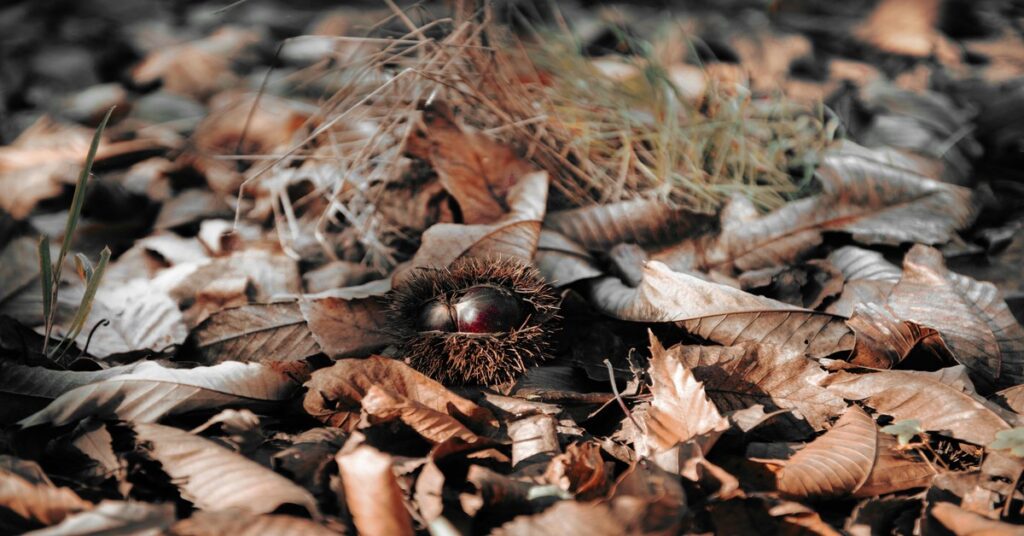
A typical harvest day starts early, often around 8 a.m. You will meet the farmer at the edge of the grove. Expect a brief orientation: how to spot a ripe chestnut (the burr will have split open), how to use a stick to knock down stubborn nuts, and most importantly, how to handle the burrs without stabbing yourself.
The work itself is repetitive but meditative. You walk slowly under the trees, bending to pick up fallen chestnuts, one by one or by the handful. You drop them into a bucket or a sack. There is no machine involved—just your hands and your attention. The farmers will show you how to sort as you go: discard nuts with holes (worms), keep only the firm, glossy ones.
The weather can shift quickly. You might start in a cool mist and end with the sun breaking through the branches. Take breaks when you need them. The farmers expect newcomers to slow down. After a few hours, you will gather what you have collected and bring it back to the farmhouse. Some hosts will crack open a bottle of wine and roast a batch for everyone to taste. Do not expect a guided tour or a scripted experience. Expect to get dirty, to learn by doing, and to feel a real connection to the land.
Gear You Need: A Practical Packing List
You do not need much, but the right gear makes a big difference. Here is what to bring:
- Sturdy footwear: Hiking boots or work boots with good tread. The ground is uneven and often muddy. Sneakers will leave you slipping on wet leaves. Travelers who need reliable footwear may find hiking boots with strong traction a worthwhile investment.
- Thick gloves: The burrs are painful. Heavy-duty work gloves, preferably leather or rubber-coated, are essential. Garden gloves are too thin. If you are dealing with sharp burrs, a pair of heavy-duty leather work gloves can save your hands.
- Layered clothing: Mornings are cold, but you will warm up once you start moving. A base layer, a fleece, and a waterproof jacket cover most conditions.
- Headlamp or flashlight: If you start before dawn or work into the evening, you will need light to see the fallen nuts.
- Bucket or sturdy bag: The farmer may provide these, but it is smart to bring your own just in case.
- Water and snacks: You will be on your feet for hours. Stay hydrated.
Good quality work gloves are worth buying before you go. They are cheap online and save your hands from a lot of pain. The same goes for a reliable headlamp—it is one of those items you will not regret having.
Chestnut Harvest vs. Chestnut Festivals: Which Is Right for You?
This is a common point of confusion, so let me clarify the differences. A chestnut harvest experience is hands-on work in the grove. You are participating in the actual gathering of the nuts. It is physical, educational, and quiet. You will spend hours outdoors with minimal conversation, focused on the task. It is for people who want to learn and earn their food.
A chestnut festival, or festa della castagna, is a social event. Think food stalls, music, games, and roasted chestnuts sold by the bag. You might see a demonstration of harvesting, but you are not doing it yourself. Festivals are fun for families with young children, couples looking for a lively afternoon, or anyone who prefers a relaxed atmosphere over hard work.
If you want to get your hands dirty and understand the process from the inside, choose the harvest. If you want to taste chestnuts and enjoy a day out, choose a festival. The best approach? Do both. Spend a morning working in the grove, then visit a nearby festival in the afternoon. Many agriturismi that offer harvest days can point you to local festivals happening during your stay.
Common Mistakes First-Time Harvesters Make
I have seen the same mistakes over and over, and they are easy to avoid if you know what to watch for.
Going too late in the season. By mid-November, most chestnuts have either been collected or spoiled. Verify the timeline with your host before you travel.
Not booking ahead. Harvest spots, especially at popular agriturismi, fill up weeks in advance. Do not assume you can just show up.
Wearing poor footwear. The ground is uneven, slippery, and covered in spiky husks. Fashion sneakers are a recipe for a twisted ankle.
Expecting a guided tour. This is work, not a walk through a museum. You will be given instructions, but you will also be expected to pick chestnuts. If you want a scripted experience, this is not it.
Not asking about processing. Some farms let you take your chestnuts home. Others do not. Ask ahead if you want to keep what you gather, and confirm whether they offer roasting or milling services.
What Happens After the Harvest: Roasting and Preserving Chestnuts
Once you have filled your buckets, the fun part begins. The most immediate way to enjoy your harvest is roasting. If your host has a fire pit or an outdoor stove, ask if you can roast some right there. There is nothing quite like cracking open a hot chestnut that you picked yourself an hour earlier.
If you have more chestnuts than you can eat in one sitting, you have options. You can boil them and peel them for freezing, or dry them and grind them into flour. In the Apennines, chestnut flour is used for pasta, bread, and cakes. Many agriturismi will show you how if you ask.
For roasting at home later, consider a simple chestnut roasting pan that sits over a gas burner or campfire. A sharp chestnut knife (with a curved blade) makes scoring the shells easier and safer than using a regular kitchen knife. These are inexpensive and useful if you plan to buy chestnuts at a market later in your trip.
Where to Stay for a Chestnut Harvest Experience
Your choice of accommodation directly affects the quality of your experience. Look for agriturismi that actively farm chestnuts, not just properties that advertise “farm stays” without farm activity. A great example is Agriturismo Baccole, which sits in the heart of the chestnut forests in the Tuscan Apennines. They offer rooms, home-cooked meals, and harvest participation during the season.
Other options include smaller agriturismi in Emilia-Romagna, particularly around the towns of Castelnovo ne’ Monti or in the Frignano area. These are less known internationally, which means you get a more local feel. Book at least a month in advance for October stays. Autumn is popular for food-focused travelers, and the best properties fill up quickly.
If you cannot find an agriturismo with harvest activities, look for a rural B&B near a forest. You may still be able to arrange a day with a local farmer by asking at the tourism office. It takes more effort, but the same advice applies: email first, confirm everything, and be flexible.
Is This Experience Family-Friendly or Best for Solo Travelers?
The chestnut harvest works well for different types of travelers, but there are nuances.
For families with children, it can be a fantastic hands-on lesson about food and nature. Children as young as six can help pick up chestnuts, especially if you keep them close and watch for the spiky burrs. But it is not a playground. There is mud, sharp objects, and uneven ground. If your kids are very young or easily bored, a festival is a better choice.
For solo travelers, the harvest is a great way to connect with locals and learn something new. You will work alongside the farmer and possibly other guests, which naturally creates conversation. It is not a solitary activity—you will be part of a small team.
For couples, it offers a shared experience that is different from the usual sightseeing. The quiet focus of picking chestnuts, followed by a simple lunch at the farm, feels intimate and grounded.
Honestly, the harvest is best for anyone who is curious, patient, and ready to get their hands dirty. It is not for travelers looking for luxury or effortless entertainment.
How Much Does a Chestnut Harvest Experience Cost?
Most agriturismi include the harvest experience in the price of your stay. Expect to pay between €80 and €150 per night for a double room during autumn, depending on the property’s amenities and location. Some farms charge a small additional fee (€10–€20 per person) for harvest participation, which usually includes instruction and can include a tasting afterward.
If you are not staying at the farm but just joining for a day, the cost is often nominal—sometimes free, sometimes €15–€30 per person. Festivals are cheaper or free to attend, but you will spend more on food and drinks once you are there.
Hidden costs: if you want to take chestnuts home, some farms charge by the kilogram. Also, you may need to buy gear (gloves, headlamp) if you do not have suitable items already. Transportation to remote mountain areas can add up if you are renting a car. Compared to a guided museum tour or cooking class, the harvest experience is very affordable for the depth of experience it provides.
Final Tips for a Smooth Chestnut Harvest Experience
Here is a short checklist to keep in mind as you plan:
- Confirm the harvest schedule with your host at least one week before your arrival.
- Pack gloves and sturdy boots before you leave home. They are harder to find in small Italian villages.
- Bring water and a few snacks. You will be outside for hours.
- Arrive early. The best harvesting is in the morning, before the wind picks up.
- Ask questions. The farmer is your best resource for learning about chestnuts, roasting methods, and local recipes.
- Take some chestnuts with you if the farm allows it. Nothing beats eating your own harvest later in the week.
This is not a polished tourist attraction. It is a chance to step into the rhythm of a centuries-old tradition. If you are ready to work a little, learn a lot, and taste some of the best chestnuts you will ever eat, then this is the experience for you.
I’ve been through this process enough times to know that the best choice is the one you’ll actually use.
To start your planning, visit agriturismobaccole.com. They know the season, they know the land, and they will welcome you like family.
Here’s the bottom line: don’t overthink it. Pick the option that matches your current skill level and budget, and start making things. You can always switch later, but you can’t get back the time you spend comparing specs.