
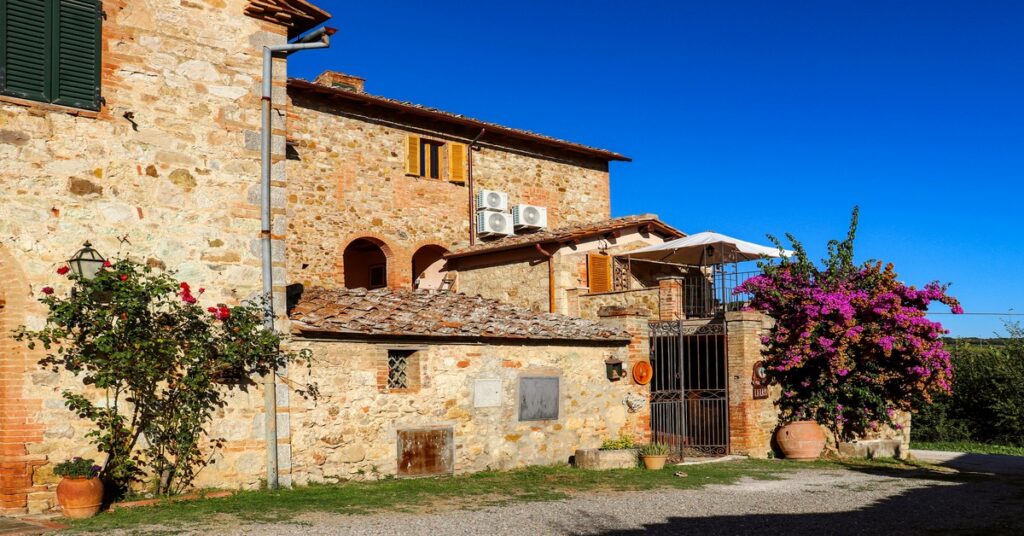
Essential Italian Phrases for Booking and Arriving at Your Agriturismo
You’ve found the perfect agriturismo. Maybe it’s a family-run vineyard in Tuscany or a hillside olive grove in Umbria. The photos look beautiful, the reviews are solid, and now you need to book. But there’s one small hurdle: the owner might not speak much English. After years of helping guests navigate this exact situation, I can tell you that knowing a handful of italian phrases for travel—specifically for booking and arrival—makes all the difference. It’s not about speaking perfectly. It’s about showing respect and getting things right. This article covers exactly what you need to say, from your first phone call to walking through the door.
Why Booking and Arrival Need Their Own Set of Phrases
Most travel phrase lists focus on ordering pasta or asking for the train station. Useful, yes, but not what you need when you’re trying to secure a room. Booking and arriving require a different kind of communication. When you call or email, you’re negotiating details: dates, prices, deposits, and special requirements. One misunderstanding can throw off your entire trip. When you arrive, you need to confirm everything face-to-face while jet-lagged and possibly flustered.
General phrases for ordering food won’t help you confirm a reservation or ask where to park. You need targeted phrases that handle logistics, not small talk. This guide is built for travelers who already have their eye on a property. You’re past the inspiration phase. You’re ready to act, and you can do it without confusion.
Related: Traveling Italy by Train: How to Reach Farm-Stays Without a Car | Smart Italy Travel Insurance Tips: Navigating Cancellation Policies for Your Trip | Agriturismo Safety Tips: Staying Safe on a Working Farm in Italy
The 7 Phrases You Need Before You Call or Email to Book
These are the workhorses. Learn them, and you can handle 90% of a basic booking conversation. I’ve used every single one dozens of times, both as a guest and when helping friends book.
1. “Buongiorno, vorrei prenotare…” (Good morning, I’d like to book…)
This is your opener. Always start with “Buongiorno” (good morning) or “Buonasera” (good evening). It sets a polite tone. Scenario: You call a small agriturismo in Le Marche. The owner answers. You say, “Buongiorno, vorrei prenotare una camera per due persone.” Simple and clear.
2. “Per due notti, per favore” (For two nights, please)
State the duration right after the opening. This prevents back-and-forth. Scenario: After saying you want to book, add “per tre notti, per favore.” The owner understands immediately you’re not just asking for a single night.
3. “Quanto costa a notte?” (How much per night?)
Price confirmation is essential. Scenario: You see a rate online, but want to confirm the exact price. Ask “Quanto costa a notte per una camera doppia?” Expect a direct answer. If there are seasonal variations, they’ll tell you.
4. “È inclusa la colazione?” (Is breakfast included?)
Many agriturismi include breakfast, but not all. Scenario: You’re comparing two properties. One includes breakfast; the other doesn’t. This phrase helps you compare apples to apples. Expect a yes or no. Sometimes they’ll offer a discount if you skip it.
5. “Arriveremo verso le…” (We will arrive around…)
Arrival time is critical, especially for smaller properties with no 24-hour reception. Scenario: You’re driving from Florence and expect to arrive at 6 PM. Say “Arriveremo verso le sei di sera.” If you’re late, call again. This builds trust.
6. “Conferma per favore via email” (Confirm by email please)
Always request written confirmation. Scenario: After agreeing on the booking, ask “Conferma per favore via email.” This gives you a written record of the dates, price, and any special requests. It’s your insurance.
7. “Grazie, arrivederci” (Thank you, goodbye)
End every call politely. Scenario: After getting your confirmation, say “Grazie, arrivederci.” It leaves a good impression.
Email Booking: Key Phrases to Write (Not Just Say)
Email is often the preferred method for agriturismo bookings. It gives you a paper trail and removes the pressure of real-time conversation. I always recommend writing the initial email in Italian, even if it’s simple. Owners appreciate the effort.
Here’s a template you can adapt. Start with “Buongiorno, vorrei prenotare una camera doppia per le date [date] a [date].” Then add “Per favore, può confermare il prezzo e se la colazione è inclusa?”
If you have dietary restrictions, add “Ho un’allergia al glutine” (I have a gluten allergy) or “Sono vegetariano/a” (I am vegetarian). If you need a pet-friendly room, say “Abbiamo un cane. È possibile?” (We have a dog. Is it possible?)
A practical tool is a small phrasebook dedicated to travel. I keep a pocket-size one in my bag. It’s accessible even without a signal. Travelers who prefer having a dedicated resource can check out a compact Italian phrasebook for reliable reference. A translation app like Google Translate is also handy, but for writing a formal email, a physical book helps you craft accurate sentences.
Arrival Day: Phrases for a Smooth Check-In
You’ve made the booking. Now you’re standing at the gate of an agriturismo in the countryside. The owner walks out. Here’s what to say.
1. “Abbiamo una prenotazione a nome di…” (We have a reservation under the name of…)
This is your first sentence. Scenario: You walk up to the reception desk (or the owner’s kitchen door). Say “Buongiorno, abbiamo una prenotazione a nome di Rossi.” It immediately establishes who you are.
2. “Ecco il nostro passaporto” (Here is our passport)
Italian law requires property owners to register your passport details. Scenario: The owner asks for your documents. You hand them over and say “Ecco il nostro passaporto.” Straightforward.
3. “Dov’è il parcheggio?” (Where is the parking?)
Parking can be tricky at older properties. Scenario: You’ve just arrived and need to unload luggage. Ask “Dov’è il parcheggio?” The owner will point or walk you there.
4. “A che ora è la colazione?” (What time is breakfast?)
Breakfast times vary wildly. Scenario: You’re an early riser. Ask “A che ora è la colazione?” Some agriturismi serve at 7:30 AM, others at 9 AM. Knowing this helps you plan your days.
5. “Possiamo vedere la camera?” (Can we see the room?)
If you’re not happy with the assigned room, you can ask to see another. Scenario: The room feels dark or small. Say “Possiamo vedere un’altra camera?” Politely. Most owners want you to be comfortable.
Caution: Many agriturismi have specific check-in windows, often between 2 PM and 7 PM. If you’re arriving late, call ahead. Use “Arriveremo dopo le otto di sera. È un problema?” (We will arrive after 8 PM. Is that a problem?)
Handling Common Booking Confusion: Dates, Names, and Numbers
Even with the best preparation, mistakes happen. Italian date format is day-month-year. Americans routinely mix this up. Numbers can be misheard. Here’s how to handle it.
Confirming Dates
After booking, confirm the date. Say “La data è il 15 giugno, corretto?” (The date is June 15, correct?) Or “Siamo arrivati il 15 e partiamo il 18, giusto?” (We arrived on the 15th and leave on the 18th, right?) Repeat the dates back to the owner.
Spelling Your Name
Your name might be tricky. Spell it out letter by letter. Say “Si scrive B-A-C-C-O-L-E” (It is spelled B-A-C-C-O-L-E). Italian letters are pronounced differently: A (ah), B (bee), C (chee), D (dee), E (eh), F (eff-eh). Learning the alphabet helps.
Numbers for Amounts
Price misunderstandings are common. If you’re quoted 120 euros, confirm: “Sono 120 euro, non 130?” (Is it 120 euros, not 130?). Repeat the number slowly. If you’re unsure, write it down. I carry a small travel journal and pen everywhere. For jotting down details like room numbers or directions, a pocket travel notebook and pen set is worth considering. It’s saved me more times than I can count.
When Something Goes Wrong: Problem-Solving Phrases
Problems happen. The room isn’t ready. The booking is missing. You don’t speak the same language. Here’s how to navigate it.
1. “C’è un problema con la prenotazione” (There is a problem with the reservation)
Use this calmly. Scenario: You arrive and the owner says your name isn’t in the book. Say “C’è un problema con la prenotazione.” They’ll likely check a different system or call someone. Stay calm.
2. “Non abbiamo ricevuto la conferma” (We did not receive the confirmation)
If you never got an email confirmation, say this. Scenario: You booked by phone but never received a written confirmation. The owner might have your details on a scrap of paper. It’s messy but fixable.
3. “Parli inglese?” (Do you speak English?)
This is a lifeline. Scenario: You’re stuck. Ask “Parli inglese?” Many owners speak some English, especially younger ones. If not, they might call someone who does.
4. “Può chiamare il titolare?” (Can you call the owner?)
If you’re dealing with a staff member who doesn’t have the authority to solve the problem, ask for the boss. Scenario: The front desk person can’t find your reservation. Say “Può chiamare il titolare?” The owner likely knows all bookings personally.
If everything fails, use gestures. Write numbers on paper. Point. A calm, patient attitude solves more problems than a perfect phrase. I always keep a small notebook and pen in my pocket for writing down key details.
Phrasebook vs. App: Which Is Better for These Situations?
Both have their place. A physical phrasebook never runs out of battery. It’s great for formal booking letters and scanning for the exact phrase you need. I’ve used mine in dimly lit rooms where phones aren’t practical. The downside is you have to look up phrases ahead of time.
A smartphone app like Google Translate or iTranslate offers instant translation and pronunciation help. That’s invaluable when you’re in a conversation and need a specific word. Download an offline language pack before you leave, because agriturismi in remote areas often have spotty signal.
The practical solution: keep both. Use the phrasebook for preparation and writing, the app for real-time conversations. But don’t overthink it. These are tools, not crutches. The most important thing is your willingness to try.
How to Practice These Phrases in 15 Minutes Before You Leave
You don’t need hours of study. Fifteen minutes of focused practice before your trip makes a real difference.
Start by reading each phrase aloud three times. Listen to the sounds. For “prenotare” (preh-noh-TAH-reh), emphasize the middle syllable. For “arriveremo” (ah-ree-veh-REH-moh), practice the rolling R. Write each phrase down once. Then role-play a booking call with a friend or in front of a mirror. Say “Buongiorno, vorrei prenotare una camera per due notti.” Have them respond with a simple “Sì, certo.” It feels silly, but it builds muscle memory.
If you want audio help, search YouTube for “Italian phrases for booking a hotel” or “Italian pronunciation basics.” A few minutes of listening puts the sounds in your head. It’s not about perfection. It’s about confidence.
Final Checklist: What to Have Ready Before Your Call or Email
Before you pick up the phone or open your email, have this information written down in front of you:
- Your travel dates (written in Euro format: day-month-year)
- Your full name spelled out (letter by letter)
- Your passport number (if required upfront, especially during peak season)
- Any special requests (ground floor room, allergies, pet needs)
- Your ideal arrival time and a backup plan for late arrival
Write it on a notecard or in a small travel journal. Keep it with your booking confirmation. When you call, you’ll feel prepared. When you arrive, you’ll handle it smoothly.
Now you’re ready. Book your stay with confidence. Check rates and book your agriturismo stay today.