
What Exactly Is a Masseria?
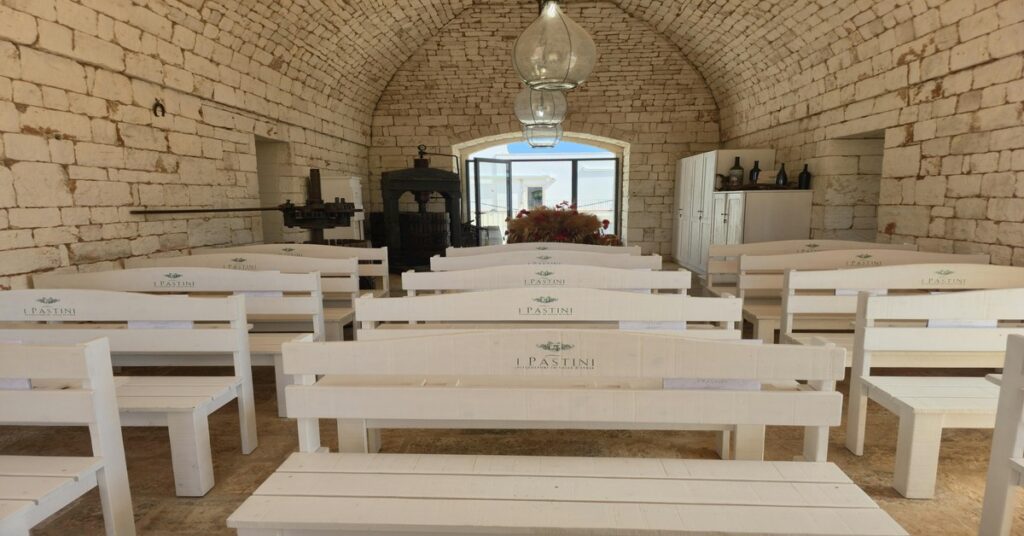
A masseria is a fortified farm estate, a type of rural building you only really find in Puglia and a few neighboring parts of southern Italy. Originally built as self-sufficient compounds to protect against coastal raiders and manage large agricultural operations—mostly olive groves, wheat fields, and vineyards—think of them as working farms that also happened to be mini fortresses.
That history shapes what a masseria feels like today. The thick stone walls, archways, and open courtyards aren’t just decoration; they were built for a purpose. Most properties sit on several acres of land, often with hundreds of ancient olive trees still producing oil. This gives them a distinct character compared to a typical country hotel or bed and breakfast.
What you find in a modern masseria varies. Some have been fully restored into luxury properties with pools, spa services, and on-site restaurants. Others are more basic, offering simple rooms with shared meals. But despite the range, some shared characteristics remain. You’re usually surrounded by farmland or countryside, not a town. Parking is almost always free since you’ll need a car. Breakfast is typically included and features local ingredients. The overall atmosphere favors quiet over convenience to nightlife.
Related: Best Italy Navigation Apps: How to Navigate Rural Roads and Find Farm-Stays | The Complete Agriturismo Le Marche Guide: Vineyards, Sunflowers ‘ Where to Stay | Smart Italy Travel Insurance Tips: Navigating Cancellation Policies for Your Trip
Expect size to range from 5-room family-run places to larger complexes with 20-plus rooms. Location matters a lot. Most masserias are rural, often down a long gravel road and a fair drive from the nearest supermarket or restaurant. That’s part of the appeal, but it’s worth knowing going in.
Why Stay in a Masseria Over a Hotel or B&B
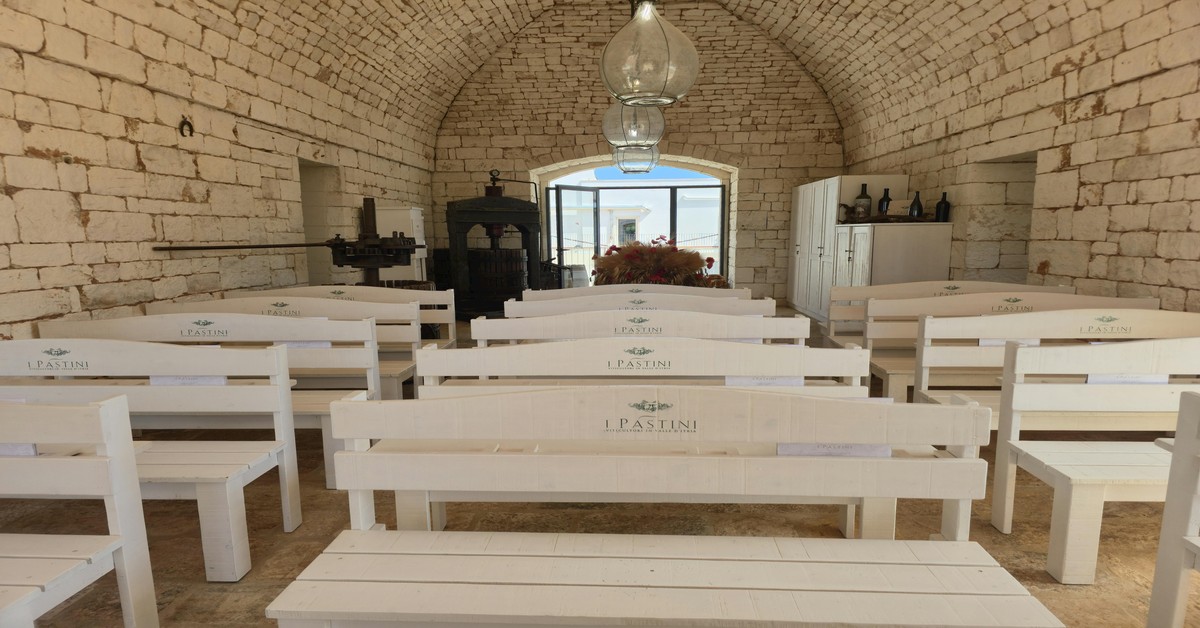
The biggest practical difference is that a masseria puts you inside the landscape instead of just near it. Hotels in towns like Bari or Lecce place you close to restaurants and attractions, but you lose the quiet and the direct access to olive groves and gardens. A masseria gives you the latter, plus some real advantages that are harder to find in a standard hotel.
For one, the food. Masserias produce their own olive oil, often grow their own vegetables, and sometimes raise livestock. Breakfasts are local cheeses, cured meats, fresh bread, pastries, and fruit. Many properties offer dinner on-site, which is usually a fixed menu of local dishes. That’s convenient if you don’t want to drive back to town after a glass of wine.
You also get cultural extras that hotels don’t offer as naturally. Olive oil tastings, cooking classes, and farm tours are common. For groups or families, these add real value. A masseria often has larger grounds as well—pools, gardens, seating areas—that make it easier to relax during the day without feeling cramped.
That said, there are tradeoffs. You are isolated. Most masserias are not walkable to anything. You need a car for every meal off-property, every sightseeing trip, and every grocery run. On-site dining is convenient, but it’s typically a single restaurant with one menu. You can’t wander down the street and choose between three trattorias like you can in town. If you like flexibility with your evening meals, that can feel limiting after a few nights.
The 3 Types of Masseria You’ll Actually Find
Not every masseria offers the same experience. In practice, you’ll come across three distinct categories. Knowing which you’re booking saves surprises.
Luxury Restored. These are the ones you see in travel magazines. Full restoration, modern amenities, often a pool, a spa, a high-end restaurant, and air conditioning throughout. Think Masseria Torre Maizza or Masseria San Domenico. These are expensive, €200 to €400 or more per night. They’re worth it if you want a proper resort experience with historical character. But they’re not rustic. You’re paying for polish.
Working Farm. This is the authentic middle ground. These masserias still produce olive oil, wine, or vegetables. The rooms are comfortable but not luxurious. Dinner might be served family-style with whatever was harvested that day. The atmosphere is genuine. Prices run €100 to €200 per night. These are best for travelers who want culture and quiet without spending too much. You sacrifice some modern convenience for real character.
Budget / Family-Run. The simplest option. These masserias are often small, with basic rooms and shared bathrooms in some cases. Breakfast might be bread, jam, and coffee. English may not be spoken. But the hospitality can be incredible, and the prices are low, often €50 to €100 per night. These work for budget travelers and longer stays. They demand flexibility and patience.
Knowing which category fits your trip will filter out half the options before you even start comparing specific properties.
How to Choose the Right Masseria for Your Trip
Start with your itinerary. Puglia is long and narrow, and driving from one end to the other takes over three hours. You don’t want a masseria near Bari if your days are spent around Lecce and Otranto. That’s the most common mistake I see—people book a beautiful property they fell in love with online, then realize it’s an hour from everything they wanted to see.
Northern Puglia, around Bari, Alberobello, and the Valle d’Itria, has a high concentration of masserias. This area is good for first-time visitors because it’s centrally located for day trips to the trulli houses, Castellana Grotte, and the Adriatic coast.
Southern Puglia, near Lecce and Otranto, leans more baroque and coastal. Masserias here often have easier beach access, especially along the Salento peninsula. If you’re prioritizing swimming and sun, this is likely your better pick.
Also consider group size. For couples or solo travelers, a small family-run masseria can be great. For families or groups, larger luxury or working farm properties are more practical because they offer more space, activities, and dining options without needing to leave.
Budget is straightforward. If you’re fine with rustic charm and basic amenities, you can save a lot. If you need convenience and comfort, pay more and don’t regret it.
The other big mistake is booking without checking the car rental situation. If you can’t rent a car, staying at a masseria is frustrating. Taxis are expensive and unreliable in rural areas. If you must skip a car, limit yourself to masserias within walking distance of a town or that offer shuttle services. Those exist, but they’re rare.
What to Expect During Your Stay
Check-in is usually restricted. Many masserias ask you to arrive between 2 PM and 6 PM. If you’re arriving on a late flight, you’ll need to coordinate directly. Some will accommodate late arrivals, but not all. Always confirm ahead.
Breakfast is almost always included and it’s typically a buffet of local items: ricotta, mozzarella, prosciutto, bread, pastries, and fruit. In budget places it might be simpler, but generally the quality is high. Dinner may be optional or mandatory. Some masserias require you to book dinner in advance. Others only serve dinner to all guests at a set time. If you value flexibility, ask about this before booking.
Pools are seasonal, usually open May through September. They are often unheated. In early May or late September, the water can be cold. If a heated pool matters, confirm directly. Air conditioning is standard in luxury and mid-range properties, but it’s not always reliable in older buildings. Family-run masserias may only have fans. Check.
Parking is easy and free at almost every masseria, which is a relief coming from Italian cities. Wi-Fi quality varies. Luxury places have reliable connections. Budget or remote ones may have weak or no signal. Don’t assume you’ll be able to stream video. Language barriers are real. In smaller properties, staff might not speak much English. A translation app helps. In luxury properties, English is usually fine.
The Best Months to Book a Masseria (and When to Avoid)
June through August is peak season. Masserias are expensive, often booked months ahead, and the coastal ones are full. That said, if you want to use the pool or have easy beach access, summer is the only reliable time. The weather is hot but dry, and everything is open.
May and September are the sweet spots. Temperatures are comfortable for sightseeing, and prices drop. Pools may be open at some properties. Crowds are smaller. The biggest risk is that some masserias close for part of these shoulder months, especially in May or late September. Always verify the specific opening dates of any property you consider.
October through April is quiet. Many masserias close entirely from November to March. Those that stay open often offer very low rates, sometimes half of summer prices. But the weather is cooler, beaches are out, and the countryside is less lush. This works if you want solitude and a focus on history and food. But confirm the property is open for your dates before getting your hopes up.
Avoid booking a coastal masseria in winter if the pool and beach access are priorities. They usually aren’t functional, and you’ll be paying for amenities you can’t use.
Common Mistakes First-Time Masseria Visitors Make
Not renting a car. This is the biggest mistake. Without a car, you’re stuck. Many masserias have no taxi service nearby, and public transport barely reaches rural areas. Rent the car.
Assuming all meals are included. Some masserias include breakfast only. Dinner is often extra. Confirm before you arrive so you aren’t surprised by the bill.
Underestimating travel time. A thirty-minute drive on a map can take forty-five on Puglia’s smaller roads. Plan your daily itinerary conservatively. You don’t want to spend half your vacation driving back and forth.
Not checking the pool situation. Is it heated? Open year-round? Available to all guests? Some masserias reserve the pool for adults only or for guests in higher room categories. Ask.
Booking too many nights in one place. Puglia is small enough that two to three nights at a single masseria is often enough. Moving every few days lets you see different areas without getting bored of the same dinner menu.
Failing to book ahead. The best masserias fill up weeks in advance for summer. If you have a specific property in mind, book early. For fall and spring, you can usually book a few weeks ahead.
Ignoring the cancellation policy. Small masserias often have strict rules. Luxury ones are more flexible. Always read the cancellation terms before paying a deposit. A non-refundable booking on a cheap room can cause headaches if your plans change.
How to Book: Direct vs. Third-Party Sites
Booking directly with the masseria’s own website often gives you more flexibility. Some properties offer late checkout, room upgrades, or welcome drinks if you book direct. You also avoid the commission fees that sometimes make third-party prices higher. Smaller masserias may only accept direct bookings via email or phone.
Third-party sites like Booking.com and Expedia offer easier cancellation and better price comparisons. You can see reviews, photos, and availabilities for dozens of properties in one place. They are easier to use if you want a safety net. For luxury masserias, third-party sites are often fine. For budget or family-run ones, booking direct may be the only option.
Read reviews critically. Don’t trust a property with only five-star reviews that sound generic. Instead, look for recent reviews that mention specific details like breakfast quality, road noise, or air conditioning performance. Distance from attractions and cleanliness matter more than one-off complaints about outdated decor.
For your own convenience, I recommend using Booking.com to research and compare, then checking the masseria’s direct website for a better rate or added perks. If the direct price is the same or within a few euros, book direct for more flexibility in communication.
What to Pack for a Masseria Stay
Insect repellent. Essential in summer. The countryside has mosquitoes, especially near olive groves and fields. Get a good DEET-free option if you prefer natural, but don’t skip this. Check current options on Amazon.
Comfortable walking shoes. The grounds are often gravel, stone, or uneven. Flip-flops won’t cut it for evening strolls or walks to the pool. Pack a pair of sturdy sandals or lightweight trainers.
Swimwear. Obvious, but pack at least two sets so one can dry overnight. Many pools don’t dry quickly in the humid evenings.
Light layers for evenings. Even in summer, temperatures can drop noticeably after sunset. A light jacket or sweater makes a difference.
Reusable water bottle. Many masserias have filtered water available. Refilling a bottle saves money and reduces plastic waste. Bring one that’s BPA-free. See popular options here.
Universal travel adapter. Italy uses Type F and Type L sockets. A universal adapter covers both. Find a reliable one.
Translation app or phrasebook. Essential for budget and family-run properties. Even if you know basic Italian, having a backup helps. Duolingo is free and works offline for basics.
Masseria vs. Agriturismo: What’s the Difference?
These terms get used interchangeably, but they’re not the same. A masseria is a specific historical building type found almost exclusively in Puglia. It’s a fortified farm estate with a distinct architectural style—stone walls, arched ceilings, central courtyard.
An agriturismo is a legal classification. It means a working farm that offers accommodation and meals to guests. An agriturismo can be found anywhere in Italy. It could be a modern farmhouse with no particular historical character, or a centuries-old building. The key is that it’s legally registered as a farm with lodging.
In practice, many masserias function as agriturismos. But not every agriturismo is a masseria. If you want the authentic architectural character unique to Puglia, search for “masseria.” If you just want farm accommodation and don’t care about the historical aspect, “agriturismo” gives you more options, especially outside Puglia.
For a trip specifically to Puglia, I recommend sticking with masserias for the experience. You won’t find them anywhere else, and they are a bigger part of the region’s identity.

Realistic Budget: What You’ll Actually Spend
Let’s break this down for a four-night stay for two people in shoulder season (May or September), assuming a mid-range working farm masseria.
Accommodation: €120–€160 per night, totaling €480–€640. Breakfast is included. Dinner on-site for two: €50–€70 total if you eat at the property, which is common.
Car rental: around €200 for four days plus fuel, roughly €40. Parking is free at the masseria. If you rent from Bari or Brindisi airport, expect extra fees for insurance and excess coverage. Budget another €50 for added peace of mind.
Meals off-property: two dinners in local restaurants, maybe €60–€80 total. Lunches and snacks on the road, €10–€15 per day, so €40–€60 extra.
Optional activities: olive oil tasting or cooking class, €30–€50 per person. For two, that’s €60–€100.
Total for two people for four nights: €1,000–€1,200. That covers accommodation, meals most nights, rental car and fuel, and one activity. For luxury masserias, expect €1,800–€2,500. For budget properties, you can get by on €600–€800.
These numbers assume you book in advance and aren’t hit by last-minute surcharges. Always keep a buffer for incidentals.
Final Checklist: Booking Your Masseria
Before you confirm any booking, verify these five things:
- Cancellation policy. Is it free cancellation up to a certain date? Or non-refundable?
- Parking. Always free at masserias, but confirm the location and if it’s on-site.
- Breakfast included. Yes or no? Buffet or continental? This affects your morning plans.
- Pool open dates. If you’re traveling in May or September, don’t assume it’s open.
- Location on map. Compare your masseria to your daily itinerary. Is it an hour away from your planned activities?
If everything checks out, book with confidence. You can check current rates on Booking.com or go direct through the property’s website. Either way, you’ll be set for one of Italy’s best rural accommodation experiences. Book your stay now and enjoy the olive groves.
Here’s the bottom line: don’t overthink it. Pick the option that matches your current skill level and budget, and start making things. You can always switch later, but you can’t get back the time you spend comparing specs.