

Introduction
Food waste is a real headache for travelers. You buy groceries for a few days, eat out more than you planned, and suddenly that half-bag of spinach or half-used wedge of cheese gets left behind in the rental fridge. It feels wasteful—bad for the environment and your wallet. But there’s a better way to think about food on the road, and some of the best lessons come straight out of Italian farmhouse kitchens. Places where nothing gets thrown out without a second thought. Getting into that mindset is one of the most practical reducing food waste travel tips you’ll pick up. This article covers how to shop, cook, and eat like an Italian nonna, even if you’re just passing through for a week.
I spent way too long figuring this out the hard way. Here’s what I wish I’d known from the start.

Why Italian Farmhouse Kitchens Waste Less Food
The difference starts with how people think about food. In an Italian farmhouse, cooking is a daily practice tied to what’s available, not a hobby. There’s no big weekly supermarket run with a massive cart. Instead, people shop small, a few times a week, buying what looks good that day. That naturally limits how much comes home. You grab a few tomatoes, some basil, a bit of pasta, and that covers lunch and dinner.
Related: Traveling Italy by Train: How to Reach Farm-Stays Without a Car | Smart Italy Travel Insurance Tips: Navigating Cancellation Policies for Your Trip | Agriturismo Safety Tips: Staying Safe on a Working Farm in Italy
Seasonality matters a lot too. When zucchini is in season, you eat it every day for two weeks—grilled, sautéed, stuffed, in a frittata. You get creative instead of bored. And you finish it before buying something new. Compare that to the habit of buying asparagus from Mexico in December just because a recipe online called for it. That’s where waste starts.
Preserving is another big one. Nonnas have been canning tomatoes, bottling olive oil, and curing meats for generations. It’s not a trendy hobby—it’s a survival skill that turns a glut of summer produce into winter meals. When you preserve food, you commit to eating it later. That alone cuts down waste significantly.
The takeaway for travelers isn’t that you need to start canning. It’s that adopting a similar mindset—smaller shopping trips, flexible menus, and a willingness to repeat ingredients—cuts down on waste right away.
Plan Your Meals Like a Nonna: Before You Travel
Waste reduction starts before you leave home. The single most impactful decision you can make is where you stay. Renting a farmhouse or apartment with a proper kitchen changes everything. You don’t need a gourmet setup. A stove, a fridge, a sharp knife, and a cutting board are enough. Without kitchen access, you’re stuck eating every meal out, which gets expensive and often leads to over-ordering. Travelers who want to set themselves up well might consider a compact cutting board that packs flat and won’t take up much space.
Before your trip, spend a few minutes reading about what’s in season at your destination. Heading to Tuscany in late spring? You’ll find artichokes, fava beans, and wild asparagus. In autumn, look for porcini mushrooms, chestnuts, and late tomatoes. Knowing this helps you shop with intention instead of guessing at the market.
Also, don’t over-plan. Leave room for spontaneity. A rigid meal plan set weeks in advance will fail because you’ll see something at the market that looks better. Instead, note a few core dishes you’d like to try, then fill in the gaps based on what’s fresh.
Shop at Local Markets, Not Supermarkets
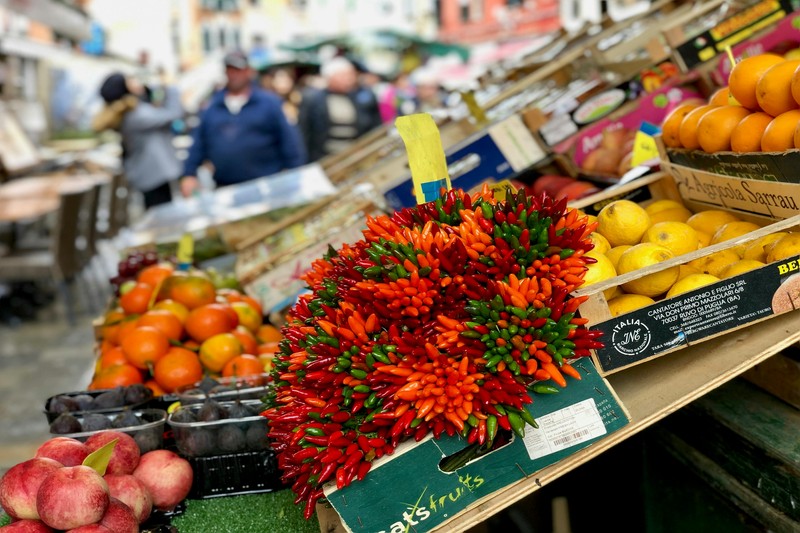
If you want to reduce food waste while traveling, the single best habit to develop is shopping daily at local markets. Italian mercati are designed for small, frequent purchases. You buy three peaches, not a bag. You ask for 200 grams of pecorino, not a pre-wrapped wedge. This naturally prevents the overbuying that happens in supermarkets where everything comes in family-sized portions.
Farmers’ market produce also lasts longer because it hasn’t been sitting in cold storage for weeks. A tomato from a local grower will stay firm on your counter for days. A supermarket tomato might turn mealy in two. That extra shelf life gives you more time to use it.
Another advantage: you can buy imperfect produce. Carrots that curve, apples with minor blemishes, tomatoes slightly too soft for the market stand but perfect for sauce. These are often sold at a discount or thrown in for free. They taste fine and keep perfectly well.
A reusable produce bag or a simple cotton market basket makes this habit easier. Nothing fancy. Just something lightweight you can toss in your daypack. A bag that folds down small is ideal because you’ll carry it every time you leave the farmhouse. A reusable produce bag set is lightweight and easy to pack for daily market runs.
Cook with What You Have: The Italian Pantry Method
Farmhouse pantries aren’t stocked with exotic ingredients. They rely on a small set of versatile staples that can turn almost anything into a meal. The core list is short: good olive oil, garlic, onions, dried pasta, canned tomatoes, dried beans or lentils, salt, and maybe some chili flakes. That’s it. With those eight items, you can make dinner out of whatever vegetables or proteins you found at the market.
This flexibility is the key to avoiding waste. Bought too many eggplants? Roast them, toss with pasta, olive oil, and garlic, and call it dinner. Leftover greens? Sauté with onion and stuff into an omelet. Half a can of tomatoes and some beans can become a minestra with stale bread. The pantry absorbs leftovers rather than requiring new ingredients.
When you’re staying in a rental with a kitchen, don’t overstock. Buy one type of pasta, one small can of tomatoes, a small onion, and a bulb of garlic. That’s enough for four to five meals when combined with whatever vegetables you pick up. You’re not cooking for a family of twelve. Scale down.
Use Every Part of the Ingredient
Italian cooks have a well-earned reputation for using everything. The nonna’s rule is simple: if you can eat it, you don’t throw it out. This isn’t about being extreme. It’s about recognizing that most scraps still have value.
Vegetable peels, onion skins, carrot tops, and herb stems all go into a stock bag kept in the freezer. When the bag is full, simmer everything for broth. That broth becomes the base for risotto, soup, or beans. No special equipment needed, just a pot and water.
Stale bread is never wasted in a farmhouse kitchen. It becomes breadcrumbs for coating vegetables or topping pasta. It gets cubed and toasted for panzanella, the Tuscan bread salad that’s one of the best ways to use up day-old loaves. It even works in sweet applications like bread pudding, though that’s less common in Italy than savory uses.
Citrus zest gets saved and dried for baking or seasoning. Parmesan rinds go into soups and stews to add depth. Meat bones are simmered for stock. If you start thinking of everything as having a second life, you’ll naturally generate less waste.
Portion Control: The Italian Way
Oversized portions are a major source of food waste when traveling. In Italy, meals are structured differently than in many other countries. Lunch is often lighter—maybe a salad, a small pasta, or a panino—while dinner is more substantial but still moderate. This two-meal rhythm prevents the need for enormous servings at either meal.
The feature I actually use most often isn’t the one I thought I’d need.
When you’re cooking at a farmhouse, portioning is simpler. Cook only what you’ll eat that meal. Pasta portions are easy to judge: 100 grams per person for a main dish. If you’re making a frittata, use three eggs for one person, not six. Resist the habit of cooking extra “just in case.” You can always boil more pasta if someone’s still hungry. You can’t un-cook a full pound.
At restaurants, sharing is normal. Antipasti are designed for the table. Primi are smaller. If you’re not sure about portion sizes, order one fewer course than you think you want. You can always grab a gelato later. This is the same logic farmhouse cooks use: eat enough to be satisfied, not stuffed.
Common Mistakes That Lead to Food Waste While Traveling
Even with good intentions, certain habits cause waste. Recognizing them early helps you avoid the same mistakes.
- Buying too much at the market. Market stalls are tempting, especially when everything looks beautiful. Stick to a list. If you see something you can’t resist, decide what you’ll replace it with rather than adding to your basket.
- Forgetting what’s in the fridge. Out of sight, out of mind. Check your refrigerator every morning before shopping. You might already have half the ingredients for dinner.
- Being too ambitious with recipes. Travel cooking isn’t the time for multi-step restaurant dishes. Keep it simple. Roasting vegetables with olive oil and salt will always work. Trying a complicated lasagna when you only have two hours will likely leave you with wasted ingredients.
- Not storing food properly. Herbs wilt quickly if left out. Soft cheese turns sour in warm weather. A few minutes of proper storage—wrapping greens in a towel, keeping tomatoes out of the fridge, using glass containers for leftovers—makes a noticeable difference in how long food lasts. A set of glass food storage containers with lids helps keep leftovers fresh and visible.
How to Store Leftovers Like an Italian Farmhouse Cook
Farmhouse kitchens don’t rely on plastic wrap. Instead, they use glass jars, ceramic bowls with lids, and cotton cloths. Glass containers are easy to clean, don’t retain smells, and let you see what’s inside. If you can, bring a couple of small glass containers with lids. They’re worth the suitcase space.
Leftover roasted vegetables become tomorrow’s frittata filling. Cooked grains or beans go into soup. Tomato sauce keeps for days in the fridge and improves in flavor. Learn what keeps well and what doesn’t. Cooked pasta, oddly enough, holds up better than you’d think if you dress it with olive oil and store it airtight. Cold pasta salad is a breakfast standard in some Italian households.
Beeswax wraps are a good alternative to plastic wrap for covering bowls or wrapping cheese. They’re reusable, washable, and compostable. A set of two or three is plenty for a week-long trip. They pack flat and weigh nothing. Beeswax food wraps are a practical addition to any travel kitchen.

Turning Leftovers into New Meals: Three Simple Recipes
Here are three recipes that every Italian farmhouse cook uses to clean out the fridge. No precise measurements needed.
Frittata
Frittata is the most flexible leftover dish there is. Whisk eggs with salt and pepper. Sauté whatever vegetables, meats, or cheeses you have in olive oil. Pour the eggs over, cook on low until mostly set, then finish under a grill or flip carefully. Eat hot, warm, or cold. Keeps for days. Works for any meal.
Ribollita (Tuscan Bread Soup)
Ribollita uses stale bread, leftover vegetables, and canned beans. Sauté onion, garlic, and whatever chopped vegetables you have. Add a can of tomatoes and a can of beans with their liquid. Simmer until vegetables are soft. Add torn stale bread and cook until the bread absorbs the liquid and thickens the soup. Finish with olive oil. That’s it. It’s better the next day.
Panzanella
Panzanella is a bread salad. Cube stale bread and toss with chopped tomatoes, cucumber, red onion, basil, and a generous amount of olive oil and red wine vinegar. Let it sit for fifteen minutes so the bread softens. Serve at room temperature. Everything in this recipe can be adjusted based on what you have. No cucumbers? Use bell peppers. No red onion? Use scallion greens. It works.
What to Do with Food You Can’t Finish
Despite your best efforts, some waste is unavoidable. The goal isn’t perfection. It’s doing better than you did before. When you can’t finish something, check if it can be donated. Unopened non-perishables like pasta, rice, or canned goods are often accepted by local food banks or community fridges. Ask at your accommodation if they know of any nearby.
If you’re staying in a rental with a garden or compost bin, use it. Vegetable scraps, eggshells, and coffee grounds decompose well. If you don’t have access to compost, don’t stress. Just try to minimize what goes in the bin next time.
Another option: leave packaged non-perishables for the next guest. A half-used bottle of olive oil, unopened pasta, or vacuum-sealed cured meat won’t be wasted if the next visitor can use them. Check with your host if they allow this. Most will be fine with it.
Final Thoughts: Eating Well Without Waste
After all the research and comparison, I’ve found that the simplest answer is usually the right one.
The core lesson from Italian farmhouse kitchens is simple: plan less rigidly, shop more often, and cook flexibly. These aren’t complicated techniques. They’re habits that anyone can adopt, even on a week-long vacation. When you shop at local markets, build a flexible pantry, and use every ingredient twice, you naturally waste less. That means you save money, eat better, and leave a lighter footprint. The next time you book a farmhouse stay in Italy, you’ll know exactly what to do in the kitchen. And if you haven’t booked that trip yet, now’s the time to start looking. A proper kitchen and a local market are all you need to put these reducing food waste travel tips into practice.
The bottom line: if you want an authentic Italian experience, agriturismos deliver something hotels cannot. Book direct, travel in shoulder season, and leave room for spontaneity. That’s where the real memories come from.