

“`html
You’ve booked a week at an agriturismo in Tuscany. The farmhouse looks perfect in the photos. The reviews mention a wonderful breakfast and a kitchen garden full of vegetables. You’re excited, and then it hits you: nobody is going to speak much English. That’s where learning a few basic Italian phrases for a farm stay goes from a nice idea to a genuine necessity. It’s not about becoming fluent. It’s about making the whole experience smoother, richer, and far more enjoyable for everyone involved.
Something I noticed after visiting dozens of these places: the hosts who are hardest to book are usually worth the wait.
Related: Agriturismo Safety Tips: Staying Safe on a Working Farm in Italy | What is an Agriturismo? Italy’s Unique Farm-Stay Explained | Smart Italy Travel Insurance Tips: Navigating Cancellation Policies for Your Trip

Why Bother Learning Phrases for a Farm Stay?
I used to think Google Translate was enough. Then I spent a week at a small family-run farm in Umbria where the Wi-Fi was spotty and the nearest cell tower was two valleys away. I learned very quickly that my phone was a paperweight. The practical benefits of having a handful of phrases memorized are huge.
First, it shows your host that you care. Italian hospitality is generous, but it works best when there’s a little effort on your side. Saying a simple “Buongiorno” when you walk into the breakfast room changes the entire tone of the interaction. Second, it gets you better service. I’ve been handed an extra slice of crostata, given a personal tour of the cantina, and invited to watch the cheese-making process because I asked in Italian. Third, it solves real problems. At the local market or farm shop, knowing how to ask about ingredients or prices is essential. Relying solely on an app is a gamble; your own brain is the most reliable tool you have. For travelers who want a practical backup, consider keeping a small Italian phrasebook in your bag. It works even when your phone doesn’t.
The Absolute Essentials: Greetings and Pleasantries
This is the foundation. Master these five phrases, and you’ll already be ahead of most tourists.
Buongiorno (bwohn-JOHR-noh) – Good morning / Good day. Use this until the late afternoon. When you see your host in the garden or sit down for breakfast, start with this.
Buonasera (bwoh-nah-SEH-rah) – Good evening. Switch to this around 4 or 5 PM.
Grazie (GRAHT-see-eh) – Thank you. The most important word you’ll learn. Say it clearly. The common mispronunciation “grazi” is noticeable to an Italian ear.
Prego (PREH-goh) – You’re welcome / Please, after you. You’ll hear this constantly. Use it when someone thanks you, or when you’re inviting your host to go through a door first.
Per favore (pehr fah-VOH-reh) – Please. Use this after requests. “Un caffè, per favore.”
A quick note on formal vs. informal. With the host family, especially older women and men, always use the formal “Lei” (you, formal). When chatting with other guests or younger farm hands, “tu” is fine. When in doubt, start with “Lei.” It’s always better to be too formal than too familiar.
At the Table: Ordering Meals and Understanding the Menu
Meals at an agriturismo are communal events. You’re often sitting at a shared table, and the menu is usually set by the family. But questions come up.
“Il menu, per favore.” (eel meh-NOO, pehr fah-VOH-reh) – The menu, please. Even if it’s written on a blackboard, this is a polite way to ask for it.
“Che cosa mi consiglia?” (keh KOH-zah mee kohn-SEE-lyah) – What do you recommend? This shows you trust your host’s judgment. They’ll usually point to their specialty.
“Sono vegetariano/a.” (SOH-noh veh-jeh-tah-ree-AH-noh / AH-nah) – I am vegetarian. Change the ending based on your gender. This is important because Italian farm cuisine is heavily centered on meat and cheese. Asking about ingredients is also useful. “Contiene glutine?” (kohn-tee-EH-neh GLOO-tee-neh) means “Does it contain gluten?”
Learn the meal structure. “Colazione” (breakfast), “Pranzo” (lunch), “Cena” (dinner). On the menu, you’ll see “Antipasto” (starter), “Primo” (first course, usually pasta or soup), “Secondo” (second course, usually meat or fish), “Contorno” (side dish), and “Dolce” (dessert). At the end of the meal, say “Il conto, per favore.” (eel KOHN-toh, pehr fah-VOH-reh) – The check, please.
Navigating the Farm: Asking for Directions and Help
Farm properties can be sprawling. The main house might be a hundred meters from the pool, and the path to the olive grove isn’t always obvious.
“Dove si trova la piscina?” (DOH-veh see TROH-vah lah pee-SHEE-nah) – Where is the pool?
“Dov’è la reception?” (doh-VEH lah reh-chehp-tsee-OHN) – Where is the reception?
“Come si arriva al borgo?” (KOH-meh see ahr-REE-vah ahl BOHR-goh) – How do I get to the village? A borgo is a small medieval hamlet, a common feature near many farms.
“A destra” (ah DEH-strah) – To the right.
“A sinistra” (ah see-NEE-strah) – To the left.
“Dritto” (DREET-toh) – Straight ahead.
If you’re joining a farm tour, try asking “Posso venire con voi?” (POH-soh veh-NEE-reh kohn voy?) – Can I come with you? It’s a friendly way to include yourself without assuming anything.
Farm Activities: Talking About the Animals and Crops
This is where knowing specific terms pays off. You’re not just a tourist; you’re a guest on a working farm.
“Posso aiutare con gli animali?” (POH-soh ah-yoo-TAH-reh kohn lyee ah-nee-MAH-lee) – Can I help with the animals? This question has opened more doors for me than anything else. Farmers love showing off their work.
“Che tipo di olio d’oliva producete?” (keh TEE-poh dee OH-lyoh doh-LEE-vah proh-doo-CHEH-teh) – What type of olive oil do you produce? This is a respectful question that shows genuine interest in their craft.
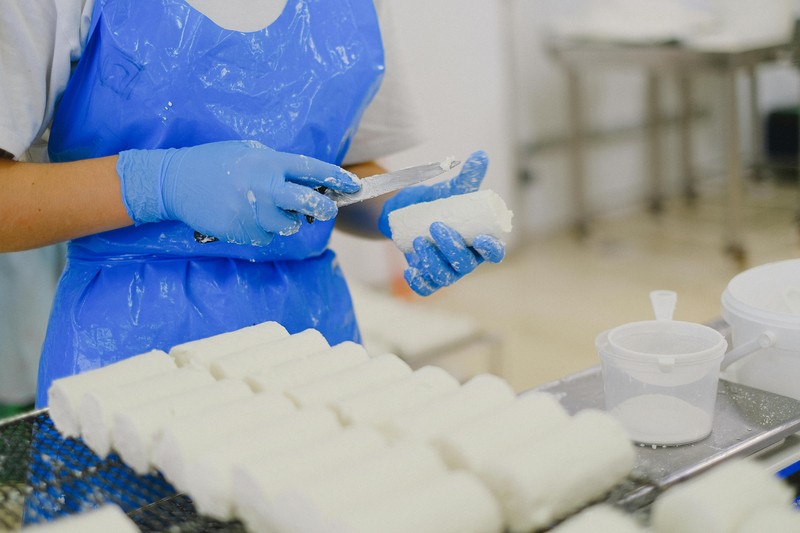
“Quanto tempo ci vuole per fare il formaggio?” (KWAN-toh TEM-poh chee VWOH-leh pehr FAH-reh eel fohr-MAH-joh) – How long does it take to make the cheese? Another good question that leads to a conversation.
Learn the names of the animals and crops you’ll likely see: Mucca (cow), Pecora (sheep), Gallina (hen), Vite (vine), Ulivo (olive tree), Grano (wheat). Knowing these words makes it easier to understand your host when they talk about the farm.
Shopping on the Farm: Buying Olive Oil, Wine, and Produce
Most farms sell their products directly. The shop might be just a corner of the living room or a small room next to the cantina. Knowing how to handle these transactions confidently is useful.
“Quanto costa quest’olio?” (KWAN-toh KOH-stah kweh-STOH-lyoh) – How much is this oil?
“Posso assaggiare il vino?” (POH-soh ahs-sah-JAH-reh eel VEE-noh) – Can I taste the wine? Don’t expect a formal tasting. They’ll likely pour you a small glass right from the bottle.
“Vorrei comprare una bottiglia di vino rosso.” (voh-RRAY kohm-PRAH-reh OO-nah boht-TEE-lyah dee VEE-noh ROH-soh) – I’d like to buy a bottle of red wine.
Learn numbers from one to ten: Uno, Due, Tre, Quattro, Cinque, Sei, Sette, Otto, Nove, Dieci. You’ll also need to understand prices in Euros. “Dieci euro e cinquanta centesimi” means ten euros and fifty cents. Practice saying the price aloud before you hand over the cash—it’s much smoother than fumbling with your wallet. If you want to practice numbers and phrases before your trip, a simple set of Italian language flash cards is a focused way to drill the essentials.
Handling Problems: Basic Emergency Phrases
Hopefully you’ll never need these, but knowing them changes how you feel about your trip. It’s a safety net.
“Mi sono perso/a.” (mee SOH-noh PEHR-soh/ah) – I am lost. Change the ending based on your gender.
“Ho bisogno di un dottore.” (oh bee-ZOH-nyoh dee oon doht-TOH-reh) – I need a doctor.
“Chiamate la polizia.” (kee-ah-MAH-teh lah poh-lee-TSEE-ah) – Call the police.
“Dov’è l’ospedale più vicino?” (doh-VEH loh-speh-DAH-leh pyoo vee-CHEE-noh) – Where is the nearest hospital?
Keep these on a card in your pocket with the farm’s address and emergency contact numbers. Don’t rely on your phone. These are for serious situations only, but knowing you have them removes a layer of anxiety.
Common Mistakes to Avoid When Speaking to Your Host
Everyone makes mistakes. That’s fine. But certain errors can make you seem careless or rude. Here are the ones to watch out for.
Mistake 1: Using “tu” with older hosts. In a family-run agriturismo, the host might be your nonna’s age. Always start with “Lei.” If they invite you to use “tu,” they’ll usually say so. Never start with “tu” on your own.
Mistake 2: Mispronouncing “grazie.” As I mentioned earlier, “grazie” has three syllables: GRAHT-see-eh. Don’t truncate it. The extra effort is noticed and appreciated.
Mistake 3: Forgetting to say “permesso.” This word means “permission.” If you’re entering someone’s home, their kitchen, or even their private garden, say “Permesso?” (pehr-MEHS-soh). It’s like saying “May I come in?” Your host’s nonna may not speak English, but she’ll appreciate a polite “Permesso” before you step into her kitchen.
Mistake 4: Shouting. English speakers often raise their voice when frustrated or think the other person isn’t understanding. Don’t do this. Slow down. Speak clearly. Repeat the phrase if needed. Volume doesn’t help.
Quick Pronunciation Guide: Saying It Right the First Time
Italian pronunciation is very consistent. If you get the vowel sounds right, you’re halfway there. Here are the specific sounds that trip up most English speakers.
The rolled “r”. This comes from the tip of your tongue touching the roof of your mouth just behind your front teeth. For “burro” (butter), the “r” is a single tap. For “carro” (cart), it’s rolled. Practice saying “trentatre” (thirty-three) to get the feel of it.
The “gli” sound. Like in “aglio” (garlic) or “formaggio” (cheese). It’s a soft, palatal sound. Think of how a cat hisses, but with the tip of your tongue touching your lower front teeth. A close English approximation is the middle of “million.”
The “gn” sound. Like in “bagno” (bathroom) or “campagna” (countryside). This is like the “ny” sound in “canyon.” Say it slowly: ca-nyon. That’s your “gn.”
Vowel clarity. Italian vowels are pure. “A” is like “ah” in “father.” “E” is like “eh” in “bed.” “I” is like “ee” in “see.” “O” is like “oh” in “go.” “U” is like “oo” in “food.” Never slur them. Say “vino” as VEE-noh, not VIE-no.
Digital Helpers: Best Apps and Tools for On-The-Go Translation
Even with good phrases, an app is a helpful backup, especially for less common words. The key is knowing which app to use and when.
Google Translate (with offline mode). This is your best option for speed. The camera translation feature (point your phone at a menu) is useful. But you must download the Italian language pack before you leave home. Cell service in rural Italy is unreliable. Without offline mode, Google Translate is useless.
Duolingo. Not for live translation. It’s for pre-trip prep. Spend ten minutes a day for two weeks before your trip. It drills basic sentence structure into your head, making it easier to form phrases on the fly.
WordReference. This is for nuance. When you need to know the exact meaning of a word, not just a translation, use this. It includes example sentences showing how a word is used in different contexts. It’s more accurate than Google Translate for specific terms like “contorno” or “primo.”
A dedicated phrase book app. Something like iTranslate or a simple no-frills phrasebook. These are fast and don’t require a data connection. They’re best for emergencies when you need a specific phrase instantly. The downside is they’re not as flexible as Google Translate for unpredictable questions.
My personal recommendation: use Duolingo for two weeks before you leave. Download the offline Italian pack on Google Translate. Keep a simple phrasebook PDF saved on your phone. That combination covers most situations. If you prefer a physical backup that never needs charging, a compact Italian travel phrase book is a reliable companion for rural farm stays.
Putting It All Together: A Sample Conversation at the Farm
Here’s how a few straightforward interactions might play out. The goal isn’t to memorize every response but to see how these phrases fit together naturally.
You (arriving): Buongiorno! Sono [Your Name]. Ho una prenotazione per due notti. (Good morning! I am [Your Name]. I have a reservation for two nights.)
Host: Benvenuto! (Welcome!)
You: Grazie. Dove si trova la mia camera? (Thank you. Where is my room?)
Host: È al primo piano, a destra. (It is on the first floor, to the right.)
You (at dinner): Buonasera. Il menu, per favore. (Good evening. The menu, please.)
Host: Ecco qui. (Here it is.)
You: Che cosa mi consiglia? (What do you recommend?)
Host: La pasta al tartufo è speciale stasera. (The pasta with truffle is special tonight.)
You: Perfetto. La prendo. E un bicchiere di vino rosso della casa, per favore. (Perfect. I’ll take it. And a glass of house red wine, please.)
Host: Subito. (Right away.)
You (later): Il conto, per favore. (The check, please.)
Host: Trenta euro. (Thirty euros.)
You: Ecco trenta. Buonanotte! (Here is thirty. Goodnight!)
Host: Grazie e buonanotte! (Thank you and goodnight!)
This is achievable. There are no complex grammar points here. Just simple, direct requests and polite acknowledgements.
Ready to Book Your Farm Stay? Start Here
You don’t need to be fluent to have a wonderful experience at an agriturismo. What you need is a handful of phrases, a willingness to try, and a bit of patience. The effort you make to speak a few words of Italian will be rewarded with warmer hospitality, better food, and memories that go deeper than a hotel room. The farm stay is waiting. The olive grove, the vineyard, the smell of fresh bread in the morning—it’s all real. The only thing missing is you with a “Buongiorno” on your lips.
Ready to explore? Start here.